
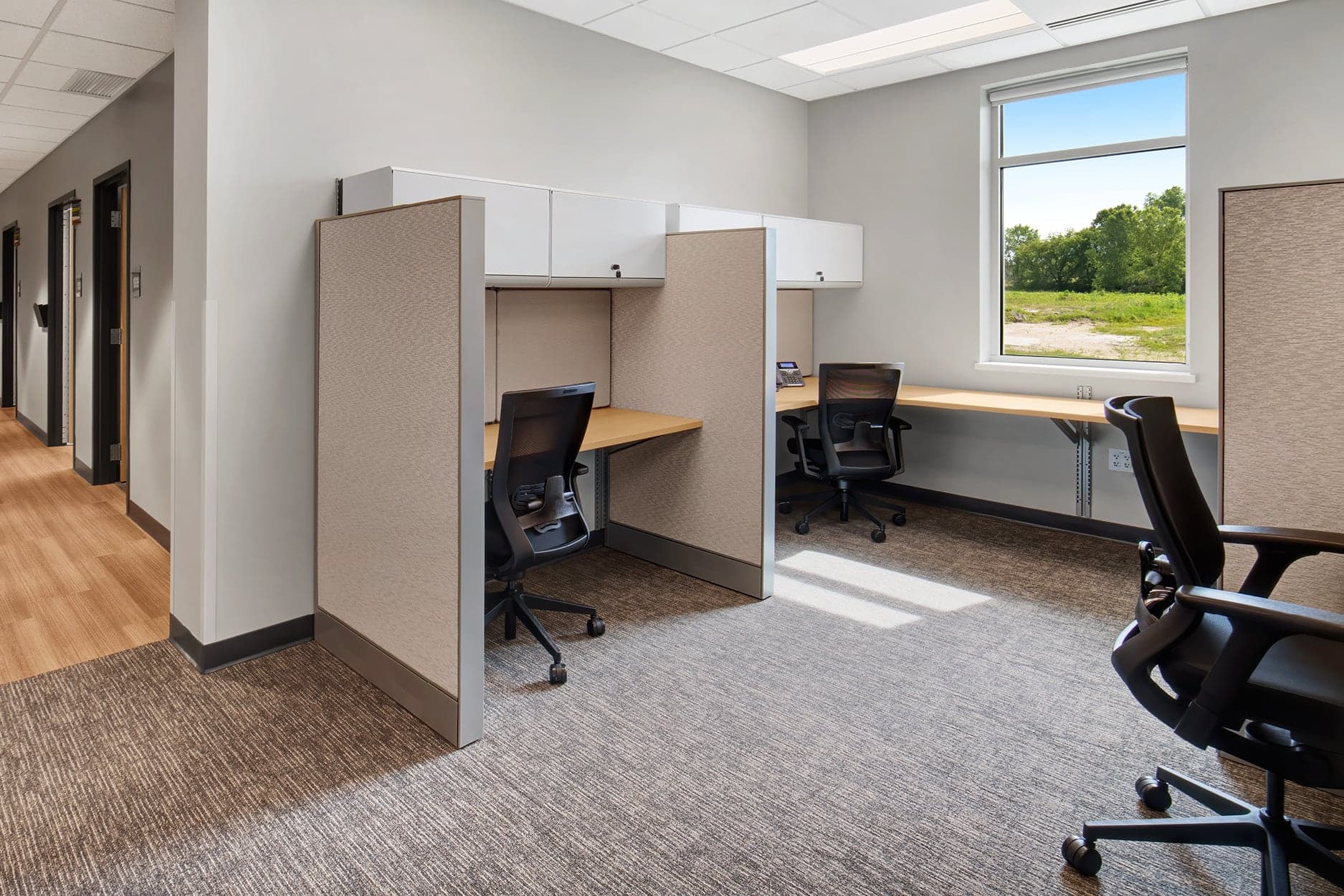
Clinical staff spend eight to twelve hours on their feet — and then they sit. Choosing the right task chair for a medical practice is not about aesthetics. It is about reducing injury, improving focus, and making the investment in staff wellbeing visible.
Healthcare workers are among the most physically demanding jobs in any sector — and that physical strain does not end when a clinician sits down. Poor seating at clinical workstations contributes to musculoskeletal disorders that are a leading cause of healthcare worker disability claims, shortened careers, and staff turnover. For practice administrators and facility managers, choosing the right task chair is not a minor decision.
This article focuses specifically on task seating for clinical staff working at workstations — not patient seating or exam room stools. The considerations are different, and the specification choices matter significantly.
The Clinical Workstation Challenge
A physician, nurse practitioner, or medical assistant at a workstation in a clinical setting faces a different set of ergonomic challenges than a corporate office worker. They may:
- Shift frequently between sitting and standing throughout a shift
- Work in spaces with limited room for full ergonomic setup (armrests at full width, chair fully reclined)
- Use multiple monitor configurations that require different head and neck positions
- Work in scrubs or clinical attire that changes how they sit compared to business clothing
- Use input devices (EMR interfaces, clinical keyboards, scanners) in fixed positions
- Take multiple brief sits per hour rather than extended seated periods
These factors mean that a task chair designed for a corporate attorney working at a fixed dual-monitor setup may not be appropriate for a clinical workstation, even if it is technically an "ergonomic chair."
What to Actually Look for in a Clinical Task Chair
Adjustability range, not just the presence of adjustability
Most commercial task chairs advertise multiple adjustment features. What matters for clinical environments is whether the adjustment range actually accommodates clinical staff — who often include smaller women working with monitors positioned for larger men, or vice versa. Key specifications to evaluate:
- Seat height range: should accommodate a range of approximately 16" to 20" or wider
- Seat depth adjustment: important for shorter users who need to reduce seat depth to maintain lumbar support
- Lumbar height and depth adjustment: not just lumbar presence, but the ability to position it correctly for different spinal lengths
- Armrest height, width, and pivot: particularly important in tight clinical spaces
Infection control compliance
This is non-negotiable in clinical environments. The chair must be cleanable with the disinfectants your facility uses — typically quaternary ammonium compounds, bleach-based products, or hydrogen peroxide solutions at varying concentrations. Look for:
- Antimicrobial or cleanability ratings from the manufacturer
- Sealed seams or seamless upholstery wherever possible — seams trap contamination
- Polyurethane or vinyl upholstery over foam that can withstand repeated cleaning without cracking or delaminating
- No exposed wood or untreated metal components on seats or backs
- Cleanability testing documentation from the manufacturer
Chairs from SitOnIt Seating, Allseating, and Global Furniture Group include healthcare-grade upholstery options specifically tested for clinical cleanability requirements.
Weight capacity and durability for multi-user environments
Clinical workstation chairs are often shared across shifts, meaning they receive more hours of use per day than a single-occupant corporate office chair. Specify chairs rated for multi-shift use (typically noted as 24/7 or continuous use ratings in manufacturer specifications) and confirm weight capacities are appropriate for your staff population.
ANSI/BIFMA durability testing — specifically BIFMA X5.1 — establishes minimum performance standards for office chairs. Clinical environments should exceed minimum standards, not just meet them. Ask your dealer for the specific BIFMA test results for any chair you are considering.
Mobility in tight spaces
Many clinical workstation areas are small, often 60 to 80 square feet per workstation or less. A chair with a full 26" base radius and free-rolling casters may be difficult to maneuver. Consider:
- Caster size and type (hard casters for carpeted surfaces, soft casters for hard floors — a common error in flooring specification)
- Base size and turning radius
- Whether a smaller-footprint clinical stool or saddle seat might be more appropriate for the specific workstation configuration
Manufacturers That Understand Clinical Environments
SitOnIt Seating produces task chairs with specific healthcare-grade upholstery options and rapid lead times — important when a practice needs to replace a chair quickly rather than wait 10 weeks. Their Serenity chair line was designed with clinical environments in mind.
Allseating offers ergonomic task chairs with extensive adjustability range and cleanability documentation. Their You chair is a strong option for clinical administrative settings where the full range of ergonomic adjustment is needed.
Global Furniture Group produces commercial seating across a range of price points with healthcare-appropriate upholstery options available on most of their task seating lines. They are a reasonable choice for practices balancing quality and budget.
A Specification Recommendation Process
Rather than selecting a chair based on catalog images or vendor recommendations alone, we recommend the following for clinical settings:
-
Identify the user population. What is the range of staff body sizes? Are there any specific mobility or accessibility requirements? What shifts and usage patterns apply?
-
Obtain sample chairs from two or three finalists. Ask the dealer for loaner chairs or floor samples for a one- to two-week evaluation period. Have clinical staff use them in actual workstation conditions.
-
Involve occupational health or a clinical ergonomist. For large practices or multi-location groups, a brief ergonomic assessment can prevent costly specification errors. Many clinical ergonomists will review chair specifications for a nominal fee.
-
Request the full cleaning protocol documentation. Before finalizing a chair specification, obtain written documentation from the manufacturer confirming which cleaning agents are safe to use, at what concentrations, and at what frequency.
-
Confirm lead time and replacement part availability. A chair that cannot be replaced or repaired within a reasonable timeframe is a liability in a busy clinical environment. Confirm the manufacturer's lead time, the dealer's inventory position, and whether replacement cylinders, casters, and armrests are stocked.
Budget Considerations
Quality clinical task seating typically ranges from $350 to $750 per chair when specified through a commercial dealer. This is meaningfully more than consumer office chairs available through office supply retailers, and appropriately so — the durability, cleanability, and ergonomic adjustability of commercial-grade chairs are not features typically found in consumer products.
Healthcare practices that try to solve a seating problem with consumer-grade chairs typically find themselves replacing them within two to three years, often at greater total cost than specifying commercial grade products from the outset.
Brixner Office Furniture works with Florida healthcare practices of all sizes to specify clinical seating that fits the environment, the budget, and the staff who will use it. Contact us to discuss your practice's specific requirements.