Gate seating has quietly become a passenger-experience investment, not a facilities line item. Here's what's driving airport furniture decisions in Florida right now — and what it costs to get wrong.
For a long time, airport seating was a solved problem: rows of gang-mounted chairs, bolted to the floor, replaced on a depreciation schedule. Function over feeling. That era is over. Terminal furniture is now one of the more visible ways an airport authority signals what kind of experience it's running — and Florida's airports, competing for connections, airline partners, and passenger satisfaction scores, are treating it accordingly.
None of this is really about aesthetics, though the results often look better. It's about a few operational realities that have changed how terminals actually get used.
Dwell Time Became the Design Brief
Security wait times, earlier boarding windows, and more connecting traffic all add up to the same thing: passengers are spending longer between the checkpoint and the gate than they used to. A terminal built for people moving through quickly doesn't serve people who are settling in for ninety minutes.
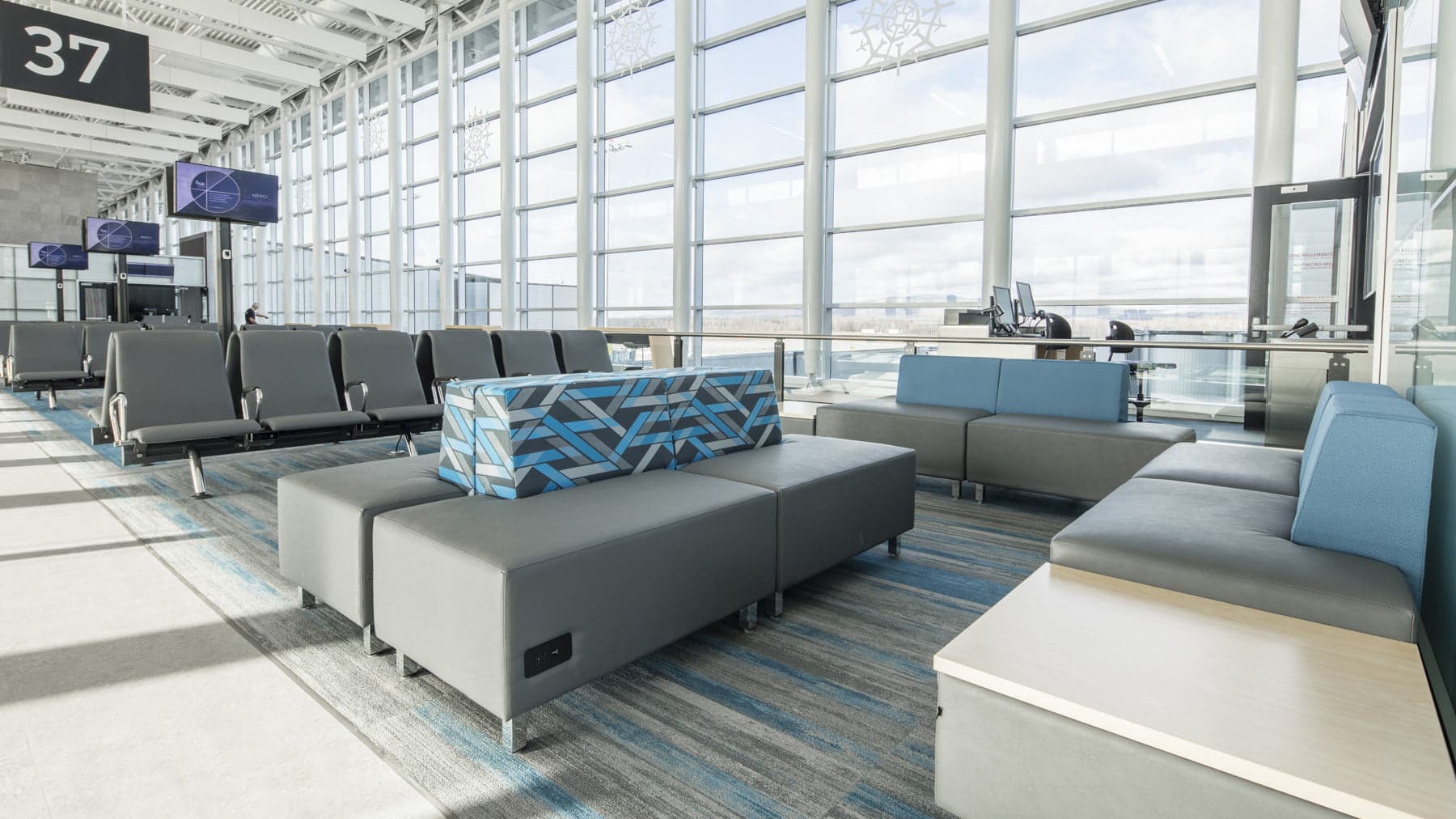
That shift is why modular lounge seating — low-back sofas, cluster seating with shared tables, mixed-height groupings — is replacing straight rows of tandem seating in the areas where airports can afford to. Rows still make sense at the gate itself, where headcount and sightlines to boarding announcements matter. But the space around it increasingly looks more like a hospitality lounge than a transportation hub, because that's closer to what it's actually being used for.
Power Is Not an Amenity Anymore — It's the Baseline
A few years ago, power-integrated seating was a premium feature you highlighted on a terminal renovation press release. Now it's closer to a checklist item, the same way Wi-Fi stopped being a selling point once every passenger expected it by default.
The practical implication for procurement is that power can't be an afterthought bolted onto furniture after the layout is set. USB-A, USB-C, and standard outlets need to be planned into the seating specification alongside electrical and low-voltage coordination, which means the furniture decision and the trades coordination happen on the same timeline — not sequentially.
Durability Standards Don't Bend for Design
Whatever a terminal's seating looks like, it still has to survive conditions that would destroy furniture almost anywhere else: continuous use with zero downtime, constant commercial cleaning, and a volume of daily contact that a corporate lobby or even a busy hospital waiting room doesn't approach.
That's the tension every airport furniture decision sits inside — the products have to be commercially rated for genuinely heavy public-assembly use, with frames, upholstery, and finishes selected for longevity first. The airports getting this right aren't choosing between durability and a better passenger experience. They're specifying products designed to deliver both, which narrows the field of real options considerably compared to what a general commercial furniture catalog offers.
Regional Airports Are Making Different Bets Than Hubs
Florida's smaller regional and general aviation airports don't have the budget or the traffic volume to fully replicate what a major hub terminal is doing, and most aren't trying to. What we see instead is more targeted investment: a handful of well-specified lounge zones near the busiest gates, upgraded seating in the areas passengers actually photograph and remember, and continued use of standard tandem seating everywhere else. It's a more disciplined version of the same trend, not a smaller one.
Staff-facing spaces get the same treatment in reverse — operations centers, security briefing rooms, and administrative offices are furnished for function and durability rather than passenger-facing design, because that's where the budget should go.
Installing Without Ever Fully Closing
The other thing that makes airport furniture projects different from almost any other commercial installation: the facility rarely, if ever, gets to close. A terminal renovation has to happen in active service, coordinated around flight schedules, security credentialing, and the hours when foot traffic actually drops low enough to work.
That reality shapes the project as much as the product selection does. Phasing by concourse or gate cluster, scheduling deliveries and installation during genuine low-traffic windows, and coordinating tightly with airport operations and security are not optional extras — they're the difference between a project that stays on budget and one that doesn't.
How Brixner Supports Aviation Furniture Projects
We plan, supply, and install furniture for airports and terminals throughout Florida and nationwide — gate and lounge seating, food court and café furniture, staff offices and operations centers, and the power-integrated seating that's now standard rather than optional. That includes:
- Free space planning for gate areas, lounges, and concourse zones
- Product specification built around high-traffic durability ratings, not showroom appearance alone
- Coordination with your AV, electrical, and security teams on power and technology integration
- Installation scheduled and credentialed around active flight operations
The Practical Takeaway
The airports doing this well aren't spending more because passenger experience trends demand it. They're spending more precisely, on the seating and layouts that get the most use, while holding the line everywhere else. That's a specification and planning problem as much as a design one — and it's worth involving your furniture partner before the layout is finalized, not after.